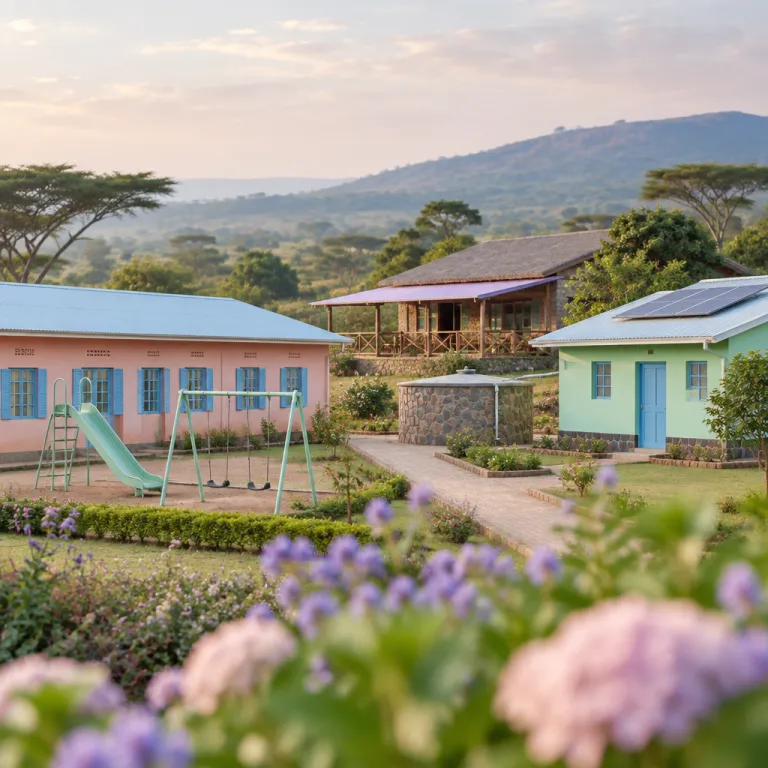
Luxury hotels in Rwanda and the quiet power of 10%
Luxury hotels in Rwanda sit at a rare intersection of conservation, design and policy. When you book a high end hotel or lodge in Rwanda, 10% of every park fee you generate is channelled into nearby communities through the national Tourism Revenue Sharing scheme, often shortened to Rwanda’s tourism revenue sharing (TRS) programme. That single decision means your stay in Kigali or beside a national park is never just about thread count and pool views.
The Rwanda Development Board manages this Tourism Revenue Sharing program and works with local governments and cooperatives to direct funds. In RDB TRS summaries for 2017–2023, officials report more than 1,000 community projects financed since the scheme began in 2005, with annual allocations rising from roughly 1 billion Rwandan francs in the late 2000s to over 3 billion RWF in recent cycles. Those funds build schools, health centres, water systems and small roads in villages that border each national park in Rwanda, from Volcanoes National Park to Nyungwe and Akagera National Park. The result is a tourism model where guests in luxury hotels and lodges help finance the very communities that protect gorilla habitat and savannah wildlife.
When you plan a stay in Rwanda, the choice of hotel or lodge quietly shapes how much money reaches those communities. Nights spent at star hotels in Kigali, or at high end hotels and resorts near a park, translate into higher park fee collections and therefore larger revenue sharing allocations. For a solo explorer, understanding this link turns a simple search for luxury hotels Rwanda into a more intentional decision about impact, and adds a layer of context to every park fee and gorilla trekking permit purchased.
From gorilla trekking permits to village schools and clinics
Gorilla trekking in Volcanoes National Park is the clearest example of how this 10% mechanism works. Each gorilla trekking permit is expensive, but a fixed share of the park fee component flows directly into community projects around park Rwanda, especially in districts that border the volcanoes. In recent RDB reports, these districts feature classroom blocks, health posts and water tanks built with TRS funds; for example, the 2022–2023 TRS update lists dozens of new classrooms and several maternity wards completed in Musanze and Nyabihu. When you stay at a lodge in the Volcanoes National area, you are not only paying a price per night for comfort but also helping fund classrooms and health posts that appear in those annual project lists.
Officially, “What is Rwanda's Tourism Revenue Sharing program?” is answered this way : “A scheme allocating 10% of tourism revenue to local communities.” The follow up question, “How are the funds used?” is equally precise : “For infrastructure, health centers, and schools near parks.” Rwanda Development Board budget tables break this down into line items such as school construction, health centre upgrades and water supply schemes. Those two statements explain why many lodges and hotels around Volcanoes National Park now host visits to nearby schools or health centres, so guests can see where their gorilla trekking fees and park entries end up.
Properties such as Bisate Lodge, Singita Kwitonda Lodge and One&Only Gorilla’s Nest sit on the edge of Volcanoes National Park, and each one leans into this national framework in a different way. At Bisate, guests can join tree planting and community visits that complement the national revenue sharing funds already supporting local infrastructure. At Singita Kwitonda and the neighbouring Kwitonda Lodge, the teams often arrange guided walks to nearby villages, where you can see water tanks, classrooms and small roads that exist partly because of the 10% allocation and partly because of lodge level philanthropy; for couples planning a stay, these properties also feature in curated guides to romantic hotels in Rwanda that focus on design, privacy and access to gorilla trekking rather than overt performance.
Volcanoes, Akagera and Nyungwe: three parks, three kinds of impact
Each national park in Rwanda channels the same 10% share, but the projects look different on the ground. Around Volcanoes National Park, where gorilla trekking dominates, funds often support schools, health centres and human wildlife conflict mitigation for farmers living near the gorilla and golden monkey corridors. In Akagera National Park, where savannah wildlife and lakes define the landscape, revenue sharing has financed water access, feeder roads and small business cooperatives in communities that once relied on cattle grazing inside the park.
Akagera National Park has seen more than one hundred community projects funded in recent years, from classroom blocks to health posts and water schemes, with RDB and park management reports highlighting new boreholes and market access roads as examples. Near Nyungwe National Park and One&Only Nyungwe House, the focus often shifts to tea growing communities and remote villages that now benefit from improved road access and health facilities. Along Lake Kivu, where some lodges and hotels overlook the water rather than a park boundary, the link is softer but still present, because many guests combine a lake stay with a visit to Volcanoes or Nyungwe and therefore contribute park fees that feed the 10% pool and sustain Rwanda tourism revenue sharing over time.
For solo travellers, this means each stop on a circuit of luxury hotels Rwanda carries a different kind of impact. A night at a lodge volcanoes property such as Sabyinyo Silverback Lodge or Silverback Lodge supports gorilla conservation and high altitude communities. Time at a lakeside hotel near Lake Kivu or a design forward hotel in Kigali might not sit beside a park fence, yet it still drives demand for gorilla trekking, Akagera safaris and Nyungwe canopy walks, which in turn expands the revenue sharing pot; if you are planning a dry season trip, you can cross reference this with seasonal advice in independent guides to the hotels that make peak months worth the premium and explain how park community projects evolve year by year.
Inside the lodges: Bisate, Singita, One&Only and community extensions
Some of the most sought after lodges in Rwanda have built their own community and conservation programs that sit alongside the national 10% scheme. Bisate Lodge, often simply called Bisate, is known for its reforestation work, where guests can plant indigenous trees that help stitch fragmented gorilla habitat back together. This lodge level initiative complements the national revenue sharing funds that build schools and health centres, creating a layered model of impact that combines Rwanda tourism revenue sharing with private conservation investment.
Singita Kwitonda Lodge, part of the wider Singita portfolio, brings a similar dual approach to the edge of Volcanoes National Park. Guests at Singita Kwitonda can join guided walks to nearby villages, where they see classrooms, water tanks and small roads funded partly by Tourism Revenue Sharing and partly by Singita’s own community programmes. The architecture and service are firmly in the luxury space, yet the narrative is always anchored in how gorilla trekking and park fees sustain both conservation and local livelihoods, and how transparent reporting on park community projects helps maintain trust.
One&Only Gorilla’s Nest and One&Only Nyungwe House extend this pattern across two very different landscapes. At One&Only Gorilla’s Nest, guests wake to views of the volcanoes and often spend the day on gorilla trekking or golden monkey excursions, knowing that a portion of their park fees will return to neighbouring communities. Down south at Nyungwe House, the focus shifts to tea plantations and ancient forest, but the same 10% principle applies, and staff can often arrange visits to community projects so guests can see how national policy translates into real infrastructure, from maternity wards to village water points.
How to choose where to stay: ethics, comfort and price per night
Choosing between lodges and hotels in Rwanda is partly about aesthetics and service, and partly about how you want your money to work. At the top end, star hotels and lodges around Volcanoes National Park, such as Bisate Lodge, Singita Kwitonda, Sabyinyo Silverback Lodge, Silverback Lodge and One&Only Gorilla’s Nest, command a high price per night but also generate significant park fees through gorilla trekking and other activities. Mid range hotels and lodges near Akagera National Park or Lake Kivu may be more accessible, yet still contribute meaningfully to the 10% revenue sharing pool and the wider network of park community projects.
When you compare accommodation offers, look beyond the headline rate and ask how each property engages with the national scheme and with its neighbours. Some lodges publish excellent reviews that mention guided visits to schools or health centres funded by Tourism Revenue Sharing, while others highlight community cooperatives they support through direct purchasing. Reading detailed reviews, and where possible cross checking them against Rwanda Development Board summaries of funded projects, can help you distinguish between marketing language and genuine engagement, especially in a market where many hotels and resorts now reference sustainability.
Facilities still matter, of course, particularly for solo travellers who value a good swimming pool, reliable Wi Fi and thoughtful common spaces. Many lodges near the parks feature a heated pool with views of the volcanoes or forest, while Kigali hotels often prioritise rooftop pools and city skyline views. As you weigh up the price per night, consider whether a slightly higher rate at a lodge that actively connects guests to community projects and explains the 10% scheme might offer better long term value than a cheaper stay that treats the national parks as a backdrop rather than a shared responsibility; for deeper context on how to structure time in the capital before or after your park stays, a concise two day cultural itinerary for Kigali that foregrounds neighbourhood walks and museums can be a useful companion.
Seeing the impact: visiting projects and reading the fine print
The most convincing way to understand Rwanda’s Tourism Revenue Sharing model is to see it in action. Many lodges around Volcanoes National Park, Akagera National Park and Nyungwe now offer short excursions to nearby schools, health centres or water projects that have received funds from the 10% allocation. Guests can walk through new classroom blocks, talk with teachers or health workers and hear how life has changed since the park revenue started flowing, often with concrete figures on how many pupils are enrolled or how many households now have clean water.
Before you travel, ask your chosen hotel or lodge how they engage with the national scheme and whether they can arrange a visit to a funded project. Some properties, such as Bisate Lodge or Singita Kwitonda, have dedicated community liaison staff who can explain how national park fees, lodge contributions and community initiatives fit together. Others may not have formal programmes but can still connect you with local leaders or cooperatives that benefit from the revenue sharing funds, and can point you towards RDB brochures or park office noticeboards that summarise recent allocations.
For a solo explorer, these visits can be as memorable as gorilla trekking or a game drive, because they reveal the human side of conservation. You see how a policy decision taken in Kigali translates into a health centre roof that no longer leaks, or a water tap that saves women hours of walking each day. When you return to your room, perhaps after a swim in the pool or a quiet drink overlooking Lake Kivu, the luxury feels different, because you understand that your stay is part of a wider story of shared benefit rather than extraction, and that Rwanda tourism revenue sharing is not an abstract policy but a visible thread running through daily life around the parks.
FAQ
How does Rwanda’s Tourism Revenue Sharing scheme work in practice ?
Rwanda’s Tourism Revenue Sharing scheme allocates 10% of all tourism revenue generated by national parks to communities living around those parks. The Rwanda Development Board channels these funds through local governments and community cooperatives, which then implement projects such as schools, health centres, water systems and small roads. In recent years, official TRS reports have highlighted hundreds of completed projects per funding cycle. When you pay park fees for gorilla trekking in Volcanoes National Park or a safari in Akagera National Park, a portion of that money is earmarked for these community investments.
Which types of projects are funded near the parks ?
Most projects funded through the 10% scheme focus on basic services and infrastructure that directly improve daily life. Around Volcanoes National Park and Nyungwe, this often means classroom construction, health posts, water access and small bridges or roads that connect remote villages to markets and clinics. In districts bordering Akagera National Park, projects also include livestock watering points, human wildlife conflict mitigation and support for cooperatives that reduce pressure on park resources. Rwanda Development Board documents group these under headings such as education, health, water and income generating activities.
Can hotel guests visit community projects supported by park revenue ?
Yes, many lodges and hotels near Rwanda’s national parks can arrange visits to projects funded by Tourism Revenue Sharing. Around Volcanoes National Park, properties such as Bisate Lodge, Singita Kwitonda and Sabyinyo Silverback Lodge frequently organise short excursions to nearby schools or health centres. In Akagera and Nyungwe, park authorities and lodge teams can also facilitate visits, provided they are scheduled in a way that respects community routines and privacy, and follow guidelines set out in park community projects briefing notes.
Does staying in a luxury lodge really make a difference for communities ?
Staying in a luxury lodge near a national park contributes significantly to community funding because high end guests typically generate more park revenue through activities such as gorilla trekking and guided safaris. The 10% allocation is calculated on total tourism revenue, so higher park fee collections translate directly into larger community budgets. When combined with lodge specific community programmes, this can create a substantial and visible impact in villages bordering the parks, from expanded school capacity to new health centre equipment.
How is Rwanda’s model different from other African conservation approaches ?
Rwanda’s Tourism Revenue Sharing scheme is centrally managed by the Rwanda Development Board, which sets the 10% allocation and oversees project selection with local partners. In countries such as Kenya and Tanzania, many conservation areas operate through decentralised conservancies or community based tourism models where revenue sharing is negotiated at the local level. Rwanda’s more centralised approach aims to provide consistent rules and transparent allocations across all national parks, while still involving communities in deciding which projects to prioritise, and publishing periodic summaries of funded initiatives to support accountability.