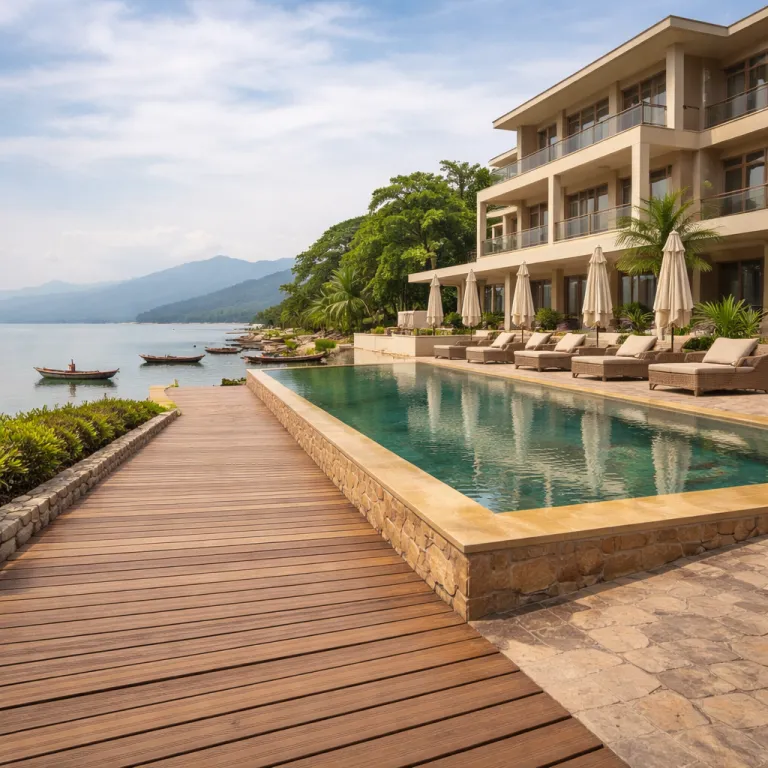
Lake Kivu, Rubavu and the question: is this the right base?
Morning mist hangs low over Lake Kivu while fishing boats glide back towards Rubavu’s shore, radios crackling softly. This is not a transit stop between Kigali and Goma; it is a destination in its own right, especially if you want a slower, water-facing stay after time in Rwanda’s mountains. The town, still often called Gisenyi, stretches along a generous curve of beach and volcanic sand, with hotels stepping back in tiers to catch the view.
For travelers weighing whether a hotel in Rubavu Rwanda is worth it, the answer is clear if you value water, space and air. You trade the urban polish of Kigali for lake breeze, mountain silhouettes and the possibility of a swim before breakfast. From the palm-lined promenade near Avenue de la Complainte to the quieter coves south of town, properties range from simple guesthouses to full resort-style hotels with swimming pools and manicured gardens.
Rubavu works especially well as a decompression stop after gorilla trekking in Volcanoes National Park or as a gentle introduction to Rwanda before heading inland. The lake is warm enough to swim, the pace is unhurried, and the best hotels Rubavu offers are used to late arrivals from Kigali after a three to four hour drive. If you want nightlife or dense museum-hopping, look elsewhere; if you want a lounger, a mountain view and the sound of waves, this is the right call.
Choosing your area in Rubavu: lakefront, town, or hillside
Lakefront first. The most coveted addresses sit directly on the shore of Lake Kivu, with lawns running down to the water and private beach access through low gates. Here you find the classic beach hotel atmosphere: parasols, a bar close enough to hear the shaker, and rooms angled so that even partial lake views feel cinematic at sunset. These are the properties to target if you want to step from your room to the sand in under a minute.
In town, around the streets climbing up from the old Gisenyi roundabout, hotels trade direct beach frontage for convenience. You are closer to local cafés, moto taxis and the small market, and you can walk to the public beach in ten to fifteen minutes. Expect compact plots, fewer gardens, but easier access to everyday Rubavu life and often slightly quieter nights away from lakeside music.
Higher up the slope towards Rubavu mountain, hillside hotels lean into panorama. You lose immediate contact with the water but gain a sweeping view of Kivu Lake, the Congolese shore and the fishing boats’ lanterns at night. These properties suit travelers who prefer a sense of retreat, perhaps with a rooftop terrace or elevated restaurant where the lake becomes a backdrop rather than a playground. If you are torn, consider a split stay: two nights on the beach, one night up the hill for a different perspective.
What to expect from rooms, views and facilities
Rooms in Rubavu hotels tend to be generous in footprint rather than hyper-designed. Think solid beds, tiled floors that stay cool in the afternoon heat, and wide windows to frame the lake or garden. The smartest properties offer a clear hierarchy: entry-level rooms facing the garden or courtyard, mid-tier options with partial lake view, and a handful of front-row rooms or suites that open directly towards Lake Kivu with balconies or terraces.
For a premium stay, prioritize layout over size. A well-positioned room with a clean, unobstructed view of the lake or Rubavu mountain will feel more luxurious than a larger space facing the car park. Many hotels include breakfast in the rate; ask when breakfast starts if you plan early boat trips or hikes, as some kitchens are more flexible than others. A good breakfast in Rubavu usually means eggs cooked to order, fresh fruit, local coffee and sometimes lake fish or African tea.
Facilities vary widely. Some resort-style hotels feature a full swimming pool set just above the beach, with loungers and attentive front desk teams coordinating towels and drinks. Others focus on gardens and shaded seating rather than water features. Free parking is common, especially in properties set slightly back from the main lakeside road, which is reassuring if you are self-driving from Kigali or Musanze. When comparing options, look carefully at how many rooms truly face the lake versus those tucked behind; “lake view” can mean anything from full panorama to a glimpse between palm trees.
Atmosphere: from quiet retreats to family friendly beach hotels
Down by the public beach near the border road, the mood is lively. Music drifts from lakeside bars, families gather on weekends, and beach hotels here lean into a social, open-door feel. These are good choices if you enjoy a bit of buzz, want easy access to casual restaurants, and do not mind some sound carrying up to your room in the evening. The trade-off is obvious: energy over absolute quiet.
Further south along the shore, beyond the busier Gisenyi stretch, hotels become more secluded. Gates, hedges and longer driveways create a sense of remove from the town. Here you find more explicitly family friendly properties, with lawns for children to run on, calmer swimming areas and staff used to arranging early dinners. Some of the most relaxed stays are in small Lake Kivu compounds where you can hear birds in the gardens more clearly than traffic.
On the hillside, the atmosphere shifts again. Hotels there feel almost like small resorts, even when they are compact, because the lake is something you look at rather than step into. A rooftop terrace, if available, becomes the social heart of the property at sunset, with guests watching the fishing boats’ lights appear one by one. If you are sensitive to noise, hillside or southern-shore hotels are usually a better fit than the busiest central strip.
Practicalities: access, services and what to check before you book
The drive from Kigali to Rubavu takes roughly three to four hours, depending on traffic and stops, with the last stretch winding through green hills before dropping towards Kivu Lake. Most established Rubavu hotels sit within a short drive of the main RN4 road, and access is straightforward even after dark. If you are arriving by private transfer, confirm that the property has clear signage from the lakeside road; some smaller places are tucked down side streets.
For drivers, free parking is almost standard, but the quality of the parking area is not. Some hotels offer paved, well-lit lots with security presence, while others rely on compacted earth or roadside spaces. If you are traveling with a larger vehicle or prefer enclosed parking, this is worth verifying in advance. A 24-hour front desk is common in the more established properties, which matters if your arrival time is uncertain or you plan early departures for boat trips or hikes.
Service in Rubavu tends to be genuinely friendly rather than theatrically polished. Staff are used to a mix of regional business travelers, families from Kigali and international visitors pairing lake time with mountain excursions. If you are traveling with pets, options are limited; a few pet friendly hotels exist, but policies vary and should never be assumed. For families, ask specifically about interconnected rooms or larger suites, as not every hotel Kivu side has them, even if it markets itself as family oriented.
Who Rubavu suits best – and when to consider another Rwandan base
Rubavu is ideal if you want water at the center of your stay. Swims in Kivu Lake, boat rides along the shore, long walks on the beach at the edge of Gisenyi’s old neighborhoods – this is the daily rhythm. Travelers coming from Volcanoes National Park often appreciate the softer climate and lower altitude, using a lakefront hotel as a place to rest legs and sort photos before flying out of Kigali.
It also works well for couples who value a view and unhurried meals more than a packed activity schedule. A room with a mountain view or a balcony over the gardens can feel surprisingly private, especially in properties with fewer rooms and well-spaced terraces. If you enjoy lingering over breakfast Rubavu style, watching fishermen return while the sun lifts the mist, this is your landscape.
Rubavu is less compelling if your priority is cultural institutions, dining variety or late-night city life. Kigali simply does that better. Likewise, if your main focus is hiking in Nyungwe or exploring tea plantations, a base further south on the lake may cut down on driving. Think of Rubavu as Rwanda’s lakeside salon: a place to slow down, swim, and watch the border lights across the water, rather than a hub for constant movement.
How to compare Rubavu hotels and choose the right stay
Start with your relationship to the water. If you want to swim daily and feel the sand underfoot, focus on true beach hotels with direct lake access and, ideally, a swimming pool set close to the shore. If you prefer to look at Kivu Lake rather than enter it, hillside properties with broad terraces and elevated dining rooms will serve you better. In both cases, scrutinize photos to see how many steps lie between your room and the water or the main viewpoint.
Next, weigh privacy against convenience. Central Rubavu hotels near the main beach and town streets make it easy to walk out for a drink or a stroll, but you will share the shoreline with day visitors. More secluded resorts south of the town or higher up the slope offer quieter nights and a stronger sense of retreat, at the cost of relying more on in-house dining. For families, look for lawns, shallow-entry pool designs and clearly described family rooms free of awkward split levels.
Finally, pay attention to the small operational details that shape a stay. Check whether breakfast is included and at what hour breakfast starts, especially if you plan early activities. Confirm whether there is consistent 24-hour front desk coverage or a more limited schedule. If you are driving, verify that free parking is on-site and secure rather than on the street. These are not glamorous questions, but in Rubavu – as in any lakeside town – they often mark the difference between a good stay and a quietly exceptional one.
Is Rubavu a good place to stay in Rwanda?
Rubavu is an excellent place to stay if you want a lakeside break with warm water, open views and a slower rhythm than Kigali. The town offers a wide range of hotels along Lake Kivu, from simple guesthouses to resort-style properties with swimming pools and gardens, making it easy to match your preferred level of comfort. It works particularly well as a decompression stop after gorilla trekking or as a relaxed base for travelers who value swimming, walking the beach and watching the fishing boats at dusk more than dense sightseeing.
What should I look for when booking a hotel in Rubavu?
When booking a hotel in Rubavu, focus first on location: decide between direct beach access, a central in-town address or a hillside setting with a broader mountain view. Then compare how many rooms truly face Lake Kivu, whether breakfast is included and at what time it starts, and if the property offers facilities you care about, such as a swimming pool or gardens. If you are driving, confirm that free parking is on-site and secure, and check whether there is a 24-hour front desk if you expect late arrival or early departure.
Are there family friendly hotels in Rubavu?
Rubavu has several family friendly hotels, especially along the quieter stretches of the lake where properties have lawns, calmer swimming areas and staff used to hosting children. These hotels often provide larger rooms or suites suitable for families, and some have shallow-entry pools or easy access to the beach for supervised play. When choosing, prioritize space to move around, safe access to the water and flexible meal times over purely aesthetic considerations.
Can I swim in Lake Kivu near Rubavu?
Swimming in Lake Kivu near Rubavu is a core part of the experience, and many hotels are designed around easy access to the water. The lake is generally calm along the main bay, and several properties maintain small private beaches or clearly marked swimming areas. If swimming is important to you, choose a hotel that either sits directly on the shore with its own beach or offers a well-maintained swimming pool close to the lakefront.
How long should I stay in Rubavu?
A stay of two to three nights in Rubavu suits most travelers, giving enough time to settle into a lakefront hotel, swim, take a boat ride and explore the town’s main beach and hillside viewpoints. One night can work as a simple stopover between Kigali and other regions, but it does not fully deliver the unhurried lakeside rhythm that makes Rubavu special. If you are combining it with gorilla trekking or other mountain activities, plan at least two nights to allow for real rest and a full day by the water.