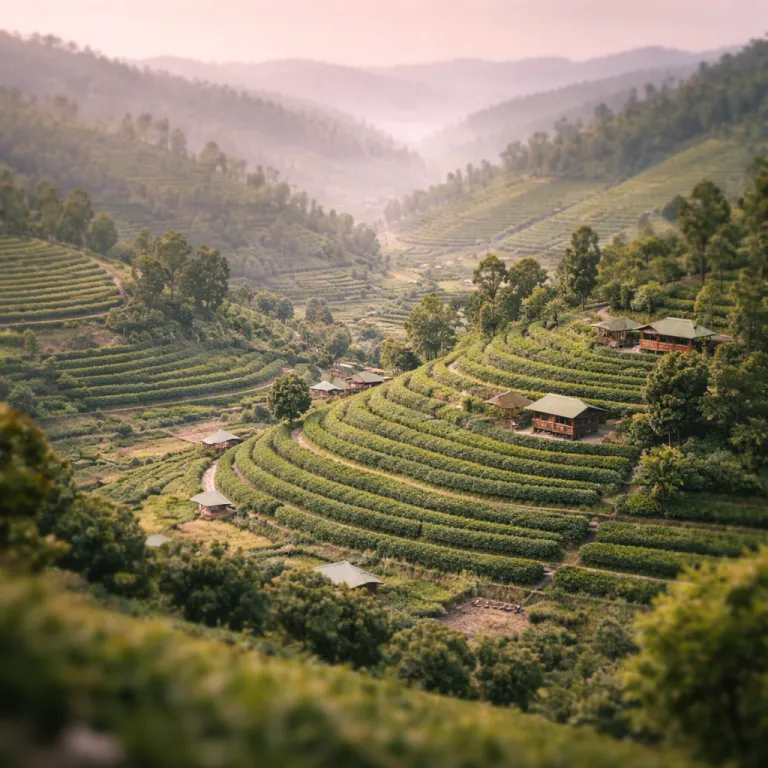
Luxury stay rwanda as a test case for real sustainability
Rwanda has turned the idea of a luxury stay into a working conservation engine. A genuine luxury stay rwanda experience is not defined only by thread count, but by how directly your room rate funds forests, rangers and communities around Volcanoes National Park. When you choose between different lodges and hotels, you are effectively voting for the kind of Africa you want your travel money to build.
The country’s most coveted experiences sit around the volcanoes that form the Virunga massif, where mountain gorillas live in dense bamboo and mist. Here, a luxury lodge in park Rwanda is never just a place to sleep; it is a frontline base for gorilla trekking, anti-poaching patrols and locally led reforestation that has reshaped northern Rwanda’s hillsides. Permit revenue from Volcanoes National Park and other protected areas such as Akagera National Park now flows into habitat expansion and community programmes, with Rwanda Development Board data indicating that tourism generated about 498 million USD in revenue in 2023, up from 445 million USD in 2022 (Rwanda Development Board, Tourism Performance Report 2023).
That structural link between your luxury stay rwanda and measurable conservation outcomes is what sets this destination apart. Many safari destinations talk about sustainability, but only a few have embedded it into the national tourism model as clearly as Rwanda has done. When you book a high-end hotel in Kigali or a remote lodge near a national park, you are entering an ecosystem where gorillas, communities and guests are part of the same economic story.
Look closely at the way each lodge or hotel describes its impact, and you will start to see a divide between marketing sustainability and structural sustainability. Marketing sustainability is the reusable straw in your cocktail or the polite note about washing fewer towels, while structural sustainability is the revenue-sharing agreement that funds a school or the land lease that pays farmers to keep forest intact. In Rwanda, the most serious luxury hotels and lodges have aligned their business models with national conservation goals, which is why this small country has become a benchmark for high-end, low-impact travel. As one Rwanda Development Board briefing notes, the national strategy is to “maximize value while minimizing environmental footprint,” a principle that now shapes investment decisions across the tourism sector (Rwanda Development Board, Sustainable Tourism Strategy, 2021).
For travelers using a curated platform such as myrwandastay.com, this context matters as much as room categories or spa menus. A thoughtful luxury stay rwanda itinerary should help you understand how your chosen lodge near Volcanoes National Park or your city hotel in Kigali fits into the wider conservation and community framework. Once you see that connection, it becomes difficult to accept vague sustainability claims from other destinations that cannot show the same level of structural proof or independently monitored impact data.
Three Rwandan models that prove luxury can fund wilderness
Rwanda’s most compelling properties show three distinct models for how luxury can finance wilderness protection. Around Volcanoes National Park, lodge-led reforestation has become a signature approach, with properties such as Bisate Lodge and Singita Kwitonda Lodge turning degraded farmland back into indigenous forest. In Kigali, a new generation of urban hotels is experimenting with eco design, while the national gorilla permit system channels high-value, low-volume tourism into protected areas.
Take the reforestation model first, because it is the most visible expression of a luxury stay rwanda in the highlands. Bisate Lodge, often simply called Bisate, reports that guests and staff have helped plant more than 100,000 indigenous trees on steep slopes overlooking the volcanoes, creating a corridor that benefits both wildlife and local farmers (Wilderness, Bisate Lodge conservation updates, 2023). Nearby, Singita Kwitonda Lodge operates its own nursery, supplying seedlings that are planted across northern Rwanda and used in locally crafted landscaping that blends the lodge into the mountain terrain (Singita, Conservation and Community Report, 2022).
These lodges are not isolated experiments; they sit within a wider network of conservation-focused properties around Volcanoes National Park. Virunga Lodge, Silverback Lodge and Sabyinyo Silverback Lodge each occupy their own ridges and valleys, offering sweeping views of the Virunga volcanoes and the patchwork of farms below. At every lodge volcanoes visitors are encouraged to understand how land leases, employment and community funds turn a night’s stay into long-term support for both mountain gorillas and the people who share their habitat. Staff often share specific examples, such as a village water project or classroom that exists because of a particular community fund.
The second model is the permit system that underpins gorilla trekking in park Rwanda and beyond. Gorilla permits are priced at a premium, but the structure is clear and transparent, with a defined share of revenue returning to communities living around the national park boundaries. Rwanda Development Board states that 10 percent of park revenues are allocated to community projects, supporting schools, health centres and small enterprises in buffer zones (Rwanda Development Board, Tourism Revenue Sharing Programme, 2022). When you walk into the forest to meet mountain gorillas, you are entering a carefully managed space where ranger salaries, trail maintenance and community projects are all funded by your decision to travel.
The third model plays out in Kigali, where properties such as Kigali Marriott Hotel and newer eco-certified addresses are experimenting with energy-efficient systems and sustainable materials. Here, the luxury stay rwanda experience is urban rather than wild, but the principles are similar, with solar power, water recycling and locally crafted furnishings replacing the token gestures that still dominate many city hotels elsewhere. For travelers interested in how this aesthetic translates to nature-based properties, it is worth reading about aspen meadow lodge style stays for Rwanda’s luxury travelers, which shows how design language can support both comfort and conservation.
Volcanoes, gorillas and the lodges that shape northern Rwanda
The slopes of Volcanoes National Park are where Rwanda’s conservation story feels most immediate. Here, a string of lodges and hotels wraps around the base of the volcanoes, each offering a different interpretation of what a luxury stay rwanda should look and feel like. The common thread is proximity to mountain gorillas and the chance to step into the forest at dawn, guided by trackers who know every silverback and every trail.
One&Only Gorilla’s Nest, often referred to simply as One&Only Gorilla Nest, sits among eucalyptus and gardens that frame the volcanoes in every direction. This lodge near the national park combines high-touch service with a strong emphasis on locally crafted details, from woven baskets to carved wood, creating a sense of place that goes beyond generic luxury. Guests come for gorilla trekking, but they stay for the quiet hours on the terrace, watching clouds move across the mountain peaks that define northern Rwanda, and listening to staff stories about how tourism has funded new cooperatives and training programmes.
Nearby, Singita Kwitonda Lodge offers a more understated aesthetic, with volcanic stone, clay bricks and timber forming a low profile against the landscape. The property’s nursery has become a symbol of how a lodge can contribute to reforestation, supplying trees that are planted both on site and in surrounding communities. For a deeper look at how this works in practice, an elevated stay at Bisate eco lodge in Rwanda’s volcanoes heartland shows how Bisate Lodge has combined circular architecture, rewilded slopes and community partnerships into a coherent conservation model that is regularly referenced in conservation NGO case studies (for example, International Gorilla Conservation Programme briefing notes, 2022).
Virunga Lodge occupies one of the most dramatic positions in park Rwanda, with a view that sweeps across lakes Burera and Ruhondo and the Virunga volcanoes beyond. From this vantage point, guests can see how the mosaic of farms, forest and villages fits together, and how a single lodge can influence land use patterns over time. Silverback Lodge and Sabyinyo Silverback Lodge, while different in style, share the same commitment to linking each guest’s stay with tangible support for mountain gorillas and the people who live around the national park, often through community-owned enterprises and guiding cooperatives.
Across these properties, the details matter as much as the big gestures. Locally sourced produce, employment for nearby villages and partnerships with guides and porters all contribute to a luxury stay rwanda that feels grounded rather than extractive. When you return from a day of gorilla trekking, the view from your room is not just a backdrop; it is a reminder that this landscape is being actively restored and protected through the choices travelers make, and through policies that tie tourism revenue directly to conservation outcomes.
Beyond Volcanoes National Park: Rwanda wilderness, urban stays and traveler responsibility
While Volcanoes National Park dominates the conversation, a complete luxury stay rwanda itinerary should also include other corners of the country. Akagera National Park in the east offers a different kind of Rwanda wilderness, with savannah, lakes and wetlands that host lions, elephants and an impressive array of birdlife. In the south west, Nyungwe House sits on the edge of an ancient forest, where chimpanzees and rare primates move through the canopy above tea plantations.
These landscapes expand the definition of what a lodge in Rwanda can be, moving beyond gorillas to embrace a wider range of ecosystems and experiences. Properties around Akagera National Park and Nyungwe Forest often combine game drives, canopy walks and cultural encounters with the same emphasis on locally crafted design and community partnerships seen in the north. For travelers planning a longer journey, it is worth exploring unforgettable things to do in Rwanda for a refined journey, which helps connect these different regions into a coherent, conservation-focused itinerary that balances time in cities with time in remote reserves.
Kigali, meanwhile, anchors the urban side of a luxury stay rwanda, with hotels such as Kigali Marriott Hotel and The Retreat by Heaven offering polished bases before or after time in the wilderness. The city’s hospitality scene reflects Rwanda’s broader transformation, with clean streets, efficient infrastructure and a growing number of eco-conscious properties that use solar power and sustainable materials. Here, the question is not whether to stay in a lodge or a hotel, but how each property’s design and operations align with the national commitment to low-impact development and transparent community benefits.
There are still tensions to acknowledge, because no form of long-haul travel is impact free. Flights into Rwanda carry a carbon cost, and many of the top lodges price in dollars, which can feel extractive if not balanced by transparent community benefits and fair employment practices. This is where travelers have real leverage, by asking specific questions about revenue sharing, staff training, local sourcing and measurable conservation outcomes before confirming a booking, and by considering voluntary carbon contributions or longer stays that reduce the ratio of flights to days on the ground.
When considering options across Rwanda’s lodges and hotels, remember that structural sustainability is not a marketing add-on but the core of the experience. A thoughtful luxury stay rwanda should leave you with a clear sense of how your presence has supported national parks, communities and the wider Rwanda wilderness, rather than just a collection of beautiful photographs. As one set of official guidance for visitors puts it plainly: “Book in advance. Check visa requirements. Consider travel insurance.” (Rwanda Development Board, Visitor Information, 2023).
Key figures shaping Rwanda’s high end hospitality and conservation
- Rwanda hosts around 20 luxury hotels and lodges, according to Rwanda Development Board, which is a significant number for a compact country focused on high-value, low-volume tourism (Rwanda Development Board, Tourism Investment Profiles, 2022).
- Tourism revenue of approximately 498 million USD in 2023, reported by Rwanda Development Board, underpins national investment in conservation, infrastructure and community development linked to protected areas (Rwanda Development Board, Tourism Performance Report 2023).
- Gorilla trekking permits in Volcanoes National Park are intentionally priced at a premium, which limits visitor numbers while generating substantial funds for anti-poaching, habitat restoration and community projects, in line with Rwanda’s high-value, low-volume tourism policy (Rwanda Development Board, Gorilla Trekking Guidelines, 2022).
- Reforestation initiatives linked to lodges such as Bisate Lodge and Singita Kwitonda Lodge have resulted in more than 100,000 indigenous trees being planted on and around lodge land, helping to reconnect fragmented habitats around the volcanoes (Wilderness, Bisate Lodge conservation updates, 2023; Singita, Conservation and Community Report, 2022).
- Ecotourism and conservation programmes channel a defined share of park revenues back to communities through revenue-sharing schemes and lodge-led funds, reinforcing Rwanda’s model of tying local livelihoods directly to the health of national parks (Rwanda Development Board, Tourism Revenue Sharing Programme, 2022).