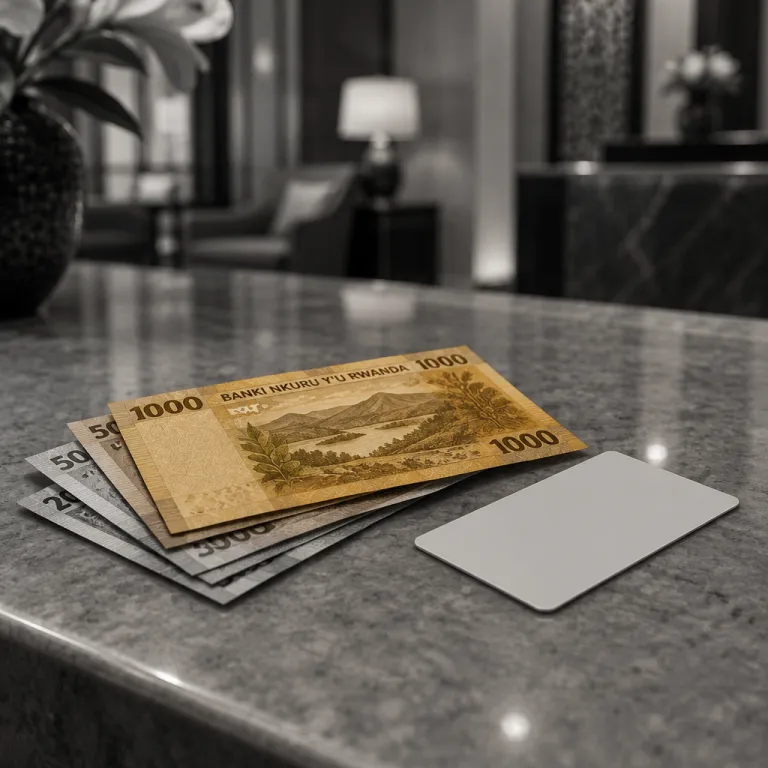
The Rwandan franc (RWF) and luxury travel: how Rwanda’s currency shapes premium stays
Understanding the Rwandan franc for luxury travel in Rwanda
The Rwandan franc is the official currency that underpins every luxury stay in Rwanda. When you plan a premium escape in Kigali or the national parks, understanding how this franc currency works against the United States dollar helps you control your budget with confidence. For high end hotel reservations, the way you handle Rwandan franc payments, USD exchange and fees will directly influence the value you receive.
The National Bank of Rwanda is the issuer of every franc note and coin, and it safeguards the integrity of the currency Rwanda uses for all legal tender transactions. According to the institution, “Its code is RWF (numeric 646).” This currency code appears on banking platforms, a currency converter and hotel payment pages whenever you view rates in RWF USD or convert USD RWF for your stay. You can verify the latest official reference rate on the National Bank of Rwanda’s daily exchange-rate page, which publishes updated figures each business day.
For guests arriving with cash in dollar bills, the exchange rate between the Rwandan franc and the USD is the first figure to check. The latest reference rate from the national bank shows how many units of RWF equal one dollar, and this benchmark mid market rate is what serious hotels and banks use as a starting point. For example, on 15 March 2024 the published reference rate indicated that 1 USD equalled approximately 1,475 RWF, meaning a USD 1,000 hotel deposit translated into about 1,475,000 RWF before any margins or fees. You will often see exchange rates displayed at a bank in Kigali, where the market rate is adjusted slightly to cover operational costs and money transfers.
Luxury hotels in Rwanda sometimes quote room prices in USD for international guests, while the final settlement in person is processed in RWF at the day’s exchange rate. This means that even when you view a dollar price online, the underlying currency Rwanda uses for settlement remains the Rwandan franc. Understanding this dual display of USD and RWF helps people avoid surprises when they send money in advance or pay incidentals at check out, especially when card issuers or banks apply their own spreads.
The currency symbol for the Rwandan franc is often written as FRW or RWF, and you may see this currency symbol on invoices, spa menus and safari add ons. While some regional travelers are familiar with the CFA franc used in parts of West and Central Africa, it is important to note that the CFA franc is a different franc currency and is not accepted as legal tender in Rwanda. Only the Rwandan franc issued by the National Bank of Rwanda functions as the official currency for hotel bills, restaurant tabs and private transfers, so carrying some local notes is essential even on a fully hosted itinerary.
How exchange rates influence luxury hotel pricing in Rwanda
When you compare five star hotels in Rwanda to similar properties abroad, the exchange rate between the Rwandan franc and the USD quietly shapes every price you see. A strong dollar against the RWF can make premium suites, private transfers and tasting menus feel surprisingly accessible to international guests. Conversely, when the Rwandan franc strengthens, the same USD budget may cover fewer nights or lower room categories, so timing can matter for high value bookings.
Luxury booking platforms usually allow you to view rates in multiple currencies, often defaulting to USD while settling locally in RWF. Behind the scenes, a currency converter applies the latest exchange rates, then adds a margin above the mid market rate to protect against volatility. For instance, if the reference rate is 1 USD = 1,475 RWF, a platform might quietly use 1 USD = 1,520 RWF, building in a spread of roughly 3 percent. This margin, combined with any platform fees, explains why the RWF USD figure you see on a booking page may differ slightly from the official rate published by the national bank.
For travelers comparing Rwanda with other long haul destinations, such as the refined five star hotels in Brazil highlighted in this curated guide to luxury hotels in Brazil, the currency question is central. In both cases, understanding the local currency code, the prevailing market rate and the typical USD exchange spread helps you benchmark value across continents. When you align your travel dates with favorable exchange rate movements, you can often upgrade from a standard room to a suite without increasing your overall money outlay, simply because the RWF exchange rate is working in your favour.
High end lodges near gorilla trekking areas often price packages in USD because their costs, from conservation levies to imported wines, are partly dollar denominated. At settlement, however, the bill is converted into Rwandan franc at the day’s exchange rate, and the hotel’s bank processes the payment in RWF. People who monitor USD RWF trends before their trip can time deposits or send money in stages, smoothing out the impact of short term currency swings and avoiding locking in an unfavourable rate on the entire amount.
Some guests prefer to prepay through international money transfers in USD, while others wait to pay in person using cards that automatically convert into RWF. In both cases, the underlying market rate between the dollar and the Rwandan franc, plus any hidden fees, determines the final cost of the stay. As a rule of thumb, major card networks such as Visa and Mastercard tend to apply a rate close to the mid market figure, while individual banks may add 1–3 percent as a foreign transaction fee. Checking how your card issuer handles foreign currency, and whether it uses the mid market rate or a marked up rate, is as important as choosing the right suite category.
Paying for lakeside and safari stays in Rwandan franc
Beyond Kigali, many of Rwanda’s most exclusive properties sit along Lake Kivu or on the fringes of national parks, where payment logistics can feel more complex. In practice, the same principles apply: the Rwandan franc remains the settlement currency, even if your confirmation email shows USD. Understanding how each lodge handles exchange rates and money transfers will help you plan for incidentals, tips and last minute excursions without scrambling for cash.
For example, when you reserve a refined lakeside stay on Lake Kivu or a safari near Nyungwe and Volcanoes National Park through a specialist platform such as this guide to lakeside stays and national parks in East Africa, you may see prices in USD for clarity. At check out, the lodge’s bank in Rwanda converts that dollar amount into RWF using the day’s exchange rate, then issues a receipt in Rwandan franc. The currency symbol RWF or FRW on that receipt confirms that the official currency of settlement is the local franc currency, not the CFA franc used elsewhere on the continent, and that the transaction has been processed under Rwandan regulations.
Guests who plan to send money in advance for private boat charters or helicopter transfers should ask for a pro forma invoice in both USD and RWF. This dual quotation lets you compare the hotel’s applied market rate with the mid market rate published by the National Bank of Rwanda, highlighting any embedded fees. If the difference is significant, you might prefer to pay on arrival using a card that applies a more transparent USD exchange, especially for high value experiences where a 2–3 percent spread can translate into hundreds of dollars.
On the ground, many lakeside and safari lodges accept card payments in RWF, while some also take USD cash for tips and small extras. When you hand over dollar bills, staff will mentally convert at an approximate USD RWF rate, which may not match the official exchange rate but is usually fair for modest amounts. For larger payments, insist on a printed invoice in Rwandan franc and settle through the lodge’s bank terminal to ensure the correct currency code and rate are applied, and to create a clear paper trail for your records.
Because these remote properties often rely on satellite connections, payment terminals can occasionally be slow, so carrying some physical franc notes is wise. You can withdraw RWF from ATMs operated by major banks in Rwanda, such as Bank of Kigali, I&M Bank or Equity Bank, before heading out, ensuring you have local money for park gates, local guides and roadside purchases. Remember that only the Rwandan franc is accepted at official park entrances, and the CFA franc or other foreign currencies will not be taken for conservation fees, even at high profile gorilla trekking sites.
Practical tips for handling money, fees and transfers in Rwanda
Managing money smoothly is part of a relaxed luxury stay, especially when you move between Kigali, Lake Kivu and the national parks. Start by checking the latest exchange rates between the Rwandan franc and the USD on a reputable currency converter before you travel. This gives you a clear sense of the mid market rate, which is the fairest benchmark for comparing bank offers, hotel conversions and money transfers, and it should be close to the reference rate on the National Bank of Rwanda’s website.
When you arrive in Rwanda, use ATMs linked to established banks to withdraw RWF, rather than exchanging large amounts of dollar cash at informal kiosks. The National Bank of Rwanda sets a reference exchange rate each business day, and commercial banks then apply their own market rate with a small spread. Typical ATM fees range from a flat charge of a few dollars to around 2 percent of the withdrawal amount, so by comparing the RWF USD figure on your ATM receipt with the published rate, you can quickly gauge whether the fees built into the transaction are reasonable.
For deposits and advance payments, many luxury properties allow you to send money via international bank transfers or card payments in USD. In these cases, ask the hotel to specify the currency code they will charge, whether the settlement will be in Rwandan franc or dollar, and which bank in Rwanda will process the transaction. Clear answers help people avoid double conversions, where funds move from USD to another currency and then into RWF, each step adding hidden fees that quietly inflate the cost of your stay.
Mobile money is widely used by residents, but for international guests staying in premium hotels, cards and bank transfers remain the most practical tools. If you plan to tip guides or drivers in cash, request smaller franc notes when you withdraw RWF, as this makes it easier to reward excellent service. Remember that while USD is sometimes accepted in larger hotels, everyday transactions in town, from cafés to craft shops, are priced in Rwandan franc and require the local currency symbol on receipts, reinforcing the central role of the RWF in Rwanda’s economy.
Travelers who are familiar with the CFA franc from other African trips should adjust expectations, because that franc currency is not interchangeable with the Rwandan franc. Only money issued under the authority of the National Bank of Rwanda, with the correct currency code and security features, is valid for payments. Keeping this distinction in mind will prevent awkward moments when settling bills or arranging last minute transfers, especially in remote areas where staff may not be able to accept or exchange other African currencies.
How the National Bank of Rwanda safeguards the Rwandan franc
Behind every seamless hotel payment in Rwanda stands a robust monetary framework managed by the National Bank of Rwanda. This central bank issues all Rwandan franc banknotes and coins, oversees exchange controls and works with partners to modernize the currency. Its policies directly influence the stability of the exchange rate between the RWF and the USD, which in turn shapes how far your travel budget stretches when converted from dollars into local money.
Recent years have seen new franc note designs with advanced security features, such as colour shifting threads and ultraviolet patterns, aimed at fighting counterfeiting. These innovations protect both residents and international visitors, ensuring that the franc currency you receive from ATMs or banks in Rwanda is genuine. When you handle cash for tips or local purchases, you benefit from this investment in secure money, even if most of your hotel expenses are settled electronically through card terminals or online gateways.
The national bank also publishes daily reference exchange rates, including the key USD exchange figure that luxury hotels and tour operators monitor closely. While commercial banks and foreign exchange bureaus apply their own market rate around this benchmark, the official publication anchors expectations and supports transparent pricing. For travelers, this means that the RWF USD rate used to convert your dollar denominated room into Rwandan franc should not deviate dramatically from the central reference, and any large gap warrants a polite query.
Legal tender rules set by the National Bank of Rwanda determine which banknote series remain valid, and by when older notes must be exchanged. Guests who carry cash for extended trips should be aware that older designs are gradually being phased out, and banks in Rwanda can swap them for the latest franc notes within specified deadlines. This process maintains confidence in the official currency while ensuring that people, including visitors, handle only high quality, secure banknotes that are easily recognised by merchants.
By understanding the role of the national bank, you gain a clearer view of why the Rwandan franc remains stable enough to support long term hotel investments and premium tourism infrastructure. A predictable exchange rate environment encourages international brands and local owners to develop new properties, knowing that USD RWF dynamics will not swing wildly overnight. As a guest, you benefit from this macroeconomic stability every time you tap your card at check in or settle a spa bill in RWF, confident that the Rwanda currency system is well regulated.
Designing your luxury itinerary around the Rwandan franc
Thoughtful use of the Rwandan franc can elevate your entire itinerary, from Kigali’s rooftop bars to remote forest lodges. Start by mapping your major expenses in USD, then convert them into RWF using a realistic exchange rate that includes a small buffer above the mid market figure. This approach gives you a working budget in the local currency, making it easier to compare hotel offers, transfers and experiences on a like for like basis and to see how far your Rwanda currency budget will stretch.
When browsing a premium booking website for Rwanda, use the option to view rates in both USD and Rwandan franc whenever possible. Seeing the currency symbol for RWF alongside the dollar amount helps you understand how sensitive each price is to exchange rate movements. If the USD RWF rate shifts in your favour between booking and travel, you might choose to extend your stay, upgrade your room or add a private excursion without increasing your overall money commitment, simply by reallocating the savings from a stronger dollar.
Consider staggering your payments to balance currency risk, especially for high value gorilla trekking packages or multi stop safaris. You might pay an initial deposit in USD at the time of booking, then settle the balance in RWF on arrival, using the then prevailing market rate. This strategy spreads your exposure to exchange rate changes and can be particularly effective when the dollar and the Rwandan franc are moving within a predictable band, reducing the chance that a single spike will affect your entire budget.
As you plan downtime between treks, factor in how local prices in RWF compare with what you would pay in other destinations for similar comfort. Reading about how Rwandan lodges turn post trek recovery into a highlight, as detailed in this guide to post trek lodge experiences in Rwanda, can help you assign realistic budgets to spa treatments and wellness rituals. When you translate those RWF prices back into USD using a fair exchange rate, the value proposition of Rwanda’s luxury scene often becomes strikingly clear, especially when compared with other long haul safari destinations.
Throughout your journey, keep an eye on small but cumulative costs, such as bank fees on withdrawals, card surcharges and margins on currency converter tools. While each charge may seem minor, together they can erode the advantage of a favourable RWF USD rate if left unchecked. By staying attentive to how every franc note, card transaction and money transfer is priced, you ensure that more of your budget goes into memorable experiences rather than invisible costs, and that the Rwanda currency system works to your advantage.
Key figures and currency facts for luxury stays in Rwanda
- The Rwandan franc is the official currency of Rwanda, and all hotel bills, park fees and most premium services are ultimately settled in RWF, even when quoted initially in USD for international guests.
- The ISO 4217 currency code for the Rwandan franc is RWF, with the numeric code 646, which you will see on bank statements, booking engines and currency converter tools when comparing RWF USD and USD RWF values.
- Recent reference data from the National Bank of Rwanda indicated that on 15 March 2024, 1 USD equalled approximately 1,475 RWF, providing a benchmark mid market rate for banks and hotels to set their own exchange rates around; always check the current figure on the national bank’s website before you travel.
- Current banknote denominations in circulation include 500, 1,000, 2,000 and 5,000 Rwandan franc notes, while coins cover smaller values, giving travelers flexibility for tipping, local purchases and minor hotel incidentals.
- Older series of franc notes are being phased out under a schedule set by the National Bank of Rwanda, and visitors holding outdated cash can exchange it at banks in Rwanda before the final demonetisation deadlines.
FAQ about the Rwandan franc and luxury hotel bookings in Rwanda
What is the official currency used to pay luxury hotels in Rwanda ?
The official currency used to settle bills at luxury and premium hotels in Rwanda is the Rwandan franc, identified by the currency code RWF. Even when room rates are quoted in USD for convenience, the final settlement through a bank in Rwanda is processed in RWF. Only the local franc currency issued by the National Bank of Rwanda is accepted as legal tender, not the CFA franc from other regions.
How can I check a fair exchange rate between usd and Rwandan franc ?
You can check a fair exchange rate by comparing the USD RWF figure offered by your bank or hotel with the reference rate published by the National Bank of Rwanda. Using a reputable currency converter that shows the mid market rate helps you see the pure market rate before any margins or fees. If the rate you are offered is significantly worse than this benchmark, you may want to adjust how you send money or which card you use, especially for large deposits.
Is it better to pay for my hotel in usd or in Rwandan franc ?
The choice between paying in USD or Rwandan franc depends on how your bank handles foreign currency and what rate the hotel applies. Many guests find it efficient to pay in RWF at the property, letting their card issuer convert from dollar to RWF at a transparent market rate. Others prefer to lock in costs by paying in USD in advance, especially when the USD exchange rate against the Rwandan franc is favourable and they want certainty over their final bill.
Can I use cfa franc or other African currencies in Rwanda’s luxury hotels ?
Luxury hotels in Rwanda do not accept the CFA franc or other African currencies as legal tender, because the only official currency is the Rwandan franc. Some properties may accept USD cash for convenience, particularly for tips or deposits, but everyday settlement is in RWF. To avoid issues, always carry some local franc notes and rely on cards or bank transfers that convert directly into RWF.
Where should I exchange money or withdraw Rwandan franc during my trip ?
The most reliable way to obtain Rwandan franc is to withdraw RWF from ATMs operated by established banks in Rwanda, especially in Kigali before heading to remote lodges. These banks use exchange rates anchored to the national bank’s reference rate, with clearly disclosed fees. Exchanging large amounts of USD cash at informal outlets is not recommended, as the market rate and security of the franc notes may be uncertain, and counterfeit risks are higher.