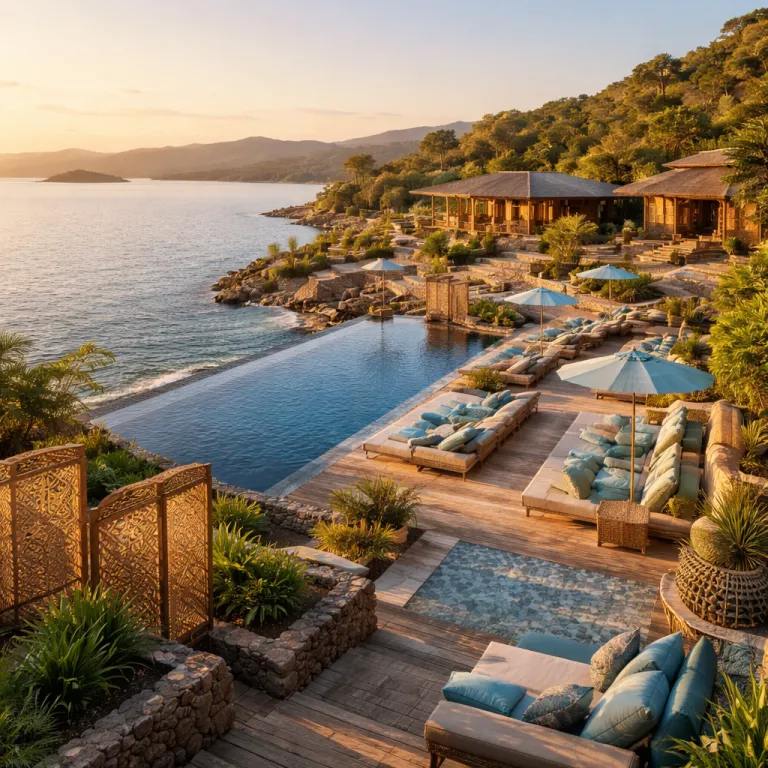
The new language of a luxury stay in Rwanda
Rwanda is no longer a footnote to a wider East African safari circuit. A high-end stay here now stands on its own terms, with hotels and lodges using architecture and design as a clear statement of intent. For solo explorers, this shift means your choice of hotel is not just about a soft bed near a national park, but about how you want to engage with a country that treats hospitality as nation building.
Across Kigali and the major national parks, the most interesting luxury hotels Rwanda offers are unapologetically contemporary. They reference volcanic stone, eucalyptus beams and woven Imigongo patterns, yet they avoid the tired safari clichés that still dominate many hotels and resorts elsewhere on the continent. This is where a new generation of Rwandan architects and international collaborators are using materials, scale and craft to argue that African luxury can be both rooted and rigorously modern.
That matters for anyone planning an upscale escape in Rwanda because design now signals values as clearly as any sustainability report. When you walk into a Kigali city hotel such as the Kigali Marriott Hotel, the clean lines and local art collection tell you as much about the country’s confidence as the efficient check in. Out in the wilderness, a lodge near a national park telegraphs its conservation commitments through reforestation corridors, low impact footprints and the way every view is choreographed toward forest, volcanoes or lake rather than toward itself.
For travelers arriving from the United States or Europe, this design discourse changes how you read the map of hotels Rwanda offers. You are no longer choosing only between proximity to gorilla trekking or to Akagera National Park, but between different interpretations of what luxury in Rwanda should feel like. A thoughtful lodge or one of the new generation hotels resorts will frame the landscape, the people and even the gorilla tracking experience with a point of view that stays with you long after the flight home.
Timing also shapes that experience, especially in a compact country where every national park is reachable within a day’s drive. Official guidance from the Rwanda Development Board is clear on seasonality for a premium visit to Rwanda: “June to September for dry season.” Another verified answer that shapes planning for high end trips is equally direct; “Is gorilla trekking available year-round? Yes, but best during dry season.” For practical planning, most travelers secure gorilla permits at least three to six months ahead for peak months, and current Rwanda Development Board guidance places standard permits at around USD 1,500 per person.
Volcanic slopes and forest villas: bisate, Singita and the new wilderness aesthetic
Nowhere is the new design language of a luxury stay in Rwanda clearer than around Volcanoes National Park in the country’s north west. Here, the volcanic slopes carry some of the most coveted gorilla trekking permits on earth, and the lodges have responded with architecture that treats the forest as collaborator rather than backdrop. The result is a cluster of luxury hotels and lodges that turn every view into a dialogue between human craft and ancient geology.
Take Wilderness Bisate Lodge, often simply called Bisate, which pioneered the volcanic forest villa typology. Each villa is a sculptural pod, referencing traditional Rwandan thatched forms while using engineered timber and glass to open a panoramic view toward the volcanoes, and this is why many design literate travelers now treat a stay here as essential to any high-end Rwanda itinerary. If you want a deeper read on how this property reset expectations for an East African lodge standard, an honest review on Wilderness Bisate Lodge and the East African lodge benchmark is a useful starting point.
Nearby, Singita Kwitonda Lodge takes a different but equally rigorous approach to wilderness design. Singita Kwitonda sits on the edge of Volcanoes National Park, its low slung buildings stitched into a reforestation corridor that physically reconnects farmland to forest, and this reforestation led siting is not a marketing flourish but the organising principle of the entire property. As one landscape architect involved in the project noted in a 2022 design panel, “every path is a reminder that the forest is slowly reclaiming its ground.” For solo travelers, walking the paths between suites and main lodge becomes a quiet lesson in how architecture, landscape design and conservation can align during a luxury stay in Rwanda.
Other names in this high altitude constellation include Virunga Lodge and the various One&Only properties. Virunga Lodge, on a private ridge within Rwanda’s borders, is all about the ridgeline view across lakes and volcanoes, while One&Only Gorilla’s Nest, often shortened to Gorilla Nest or One&Only Gorilla, wraps you in eucalyptus forest with a design vocabulary that feels more sculpted than rustic, and each of these hotels and lodges offers a different way to frame the emotional intensity of gorilla tracking. When you return from gorilla trekking or gentler gorilla tracking style hikes, the way your suite opens to the landscape, the materials under bare feet and the quiet of the firepit all shape how you process that silverback stare.
Even within this small area, the choice between a lodge such as Bisate Lodge, a more classic property like Virunga Lodge or a resort style option such as a Rwanda One&Only address is not trivial. Some travelers will prioritise the closest access to Volcanoes National Park and the volcanoes national trailheads, while others will trade a slightly longer drive for a more experimental design or a particular view hotel angle over the lakes. The key is to treat architecture and landscape integration as part of your decision matrix, not as an afterthought once the gorilla permit is secured, and to allow at least two and a half hours by road from Kigali to most lodges near Volcanoes National Park.
From Kigali to Nyungwe and Akagera: design literacy across Rwanda’s luxury circuit
Design forward thinking is not confined to the volcanoes region; it now runs through the entire luxury stay Rwanda circuit. Start in Kigali, where the Kigali Marriott Hotel anchors the city centre with an international standard of service and a calm, contemporary interior that still leaves room for Rwandan art and textiles. For a solo explorer, this kind of city hotel offers a reassuring base before you head into the national parks, with the added benefit of walkable access to galleries, cafés and the city’s famously immaculate streets.
From Kigali, many travelers head south to Nyungwe National Park, where tea plantations give way to one of Africa’s most important montane forests. Here, One&Only Nyungwe House, often simply called Nyungwe House, uses sustainable timber, stone and expansive glazing to pull the forest canopy into every room, and the result is a lodge that feels both cocooned and outward looking during a luxury stay in Rwanda. When you sit on the terrace after a canopy walk, the layered view across tea fields and forest makes it clear why this property is considered one of the most compelling hotels resorts in the country.
On the eastern flank of Rwanda, Akagera National Park offers a different kind of wilderness, with savannah, lakes and restored wildlife populations. Magashi Camp, set within Akagera National Park, is a case study in how a small lodge can deliver high end comfort while keeping a light footprint, and its tented suites use canvas, timber and careful orientation to maximise both breeze and view over the lake. For travelers comparing options, Akagera National Park is better for classic game drives and boating, while Volcanoes National Park excels at gorilla trekking and high altitude hiking.
Conservation is the through line connecting these properties, and it is increasingly treated as a non negotiable standard for any serious luxury stay in Rwanda. A detailed analysis on why Rwanda is setting the sustainability bar for African luxury explains how reforestation, community partnerships and strict national park management underpin the guest experience. As Kigali based architect Claudine Mukamana has argued in recent interviews, “if a lodge does not improve the forest and the village around it, it is not luxury, it is just expensive.” For solo travelers, this means your choice of hotel or lodge is also a choice about which conservation and community projects you want your nightly rate to support.
Even practicalities like timing and logistics benefit from this more literate approach to the country. Knowing the current local time in Kigali before you land, which you can check through a dedicated resource on the city’s time zone for your next luxury stay, helps you coordinate transfers between Kigali, Nyungwe and Akagera without friction. When every transfer, every view hotel moment and every guided walk is part of a tightly curated itinerary, these small details add up to a smoother, more intentional journey.
What to book, what to skip and how design sharpens solo travel
With roughly forty five luxury hotels spread across Rwanda, curation matters more than ever. Not every hotel or lodge carrying a high nightly rate delivers on the design and conservation standards that now define a meaningful luxury stay in Rwanda. For solo explorers, the difference between a property that treats you as a room number and one that reads your travel style can be the difference between a trip that lingers and one that blurs.
Three properties stand out as essential case studies for anyone serious about design led travel in Rwanda. Wilderness Bisate Lodge is the benchmark for volcanic forest villas and for how a lodge can use vernacular forms without slipping into pastiche, while Singita Kwitonda shows how reforestation and architecture can be planned together from the ground up. One&Only Gorilla’s Nest, often referred to as Gorilla Nest, completes the triangle with a more overtly sculptural approach, where elevated walkways and dramatic volumes turn the act of moving between spa, restaurant and suite into a kind of forest choreography.
On the other side of the ledger, there are properties you can safely skip if design and conservation are central to your luxury stay in Rwanda. Any hotel that leans on generic safari décor, offers only a token nod to local craft and treats the surrounding national park as a backdrop rather than a partner will feel thin compared with the likes of Nyungwe House, Magashi Camp or Virunga Lodge. When a property’s main selling point is a long list of amenities rather than a clear point of view on place, it is usually a sign to look elsewhere.
For solo travelers, design literacy becomes a powerful filter when scanning hotels Rwanda wide. Look for how a lodge or resort talks about its relationship to Volcanoes National Park, Nyungwe or Akagera National Park, and pay attention to whether gorilla trekking, gorilla tracking or game drives are framed as extractive thrills or as part of a longer story of restoration. The best hotels and resorts will also be explicit about how they work with local communities, whether through employment, guiding, or the kind of thoughtful gift shop curation that turns retail into a direct line of support.
Finally, remember that a luxury stay in Rwanda is not only about the headline moments with a gorilla family or a lion sighting in Akagera. It is about how your Kigali hotel handles late night arrivals from the United States, how your lodge frames the first view of mist over the volcanoes at dawn, and how your chosen resort leaves you feeling about the country as you drive back to the airport. When architecture, landscape and service are aligned, Rwanda’s hotels, lodges and resorts offer a standard of hospitality that does not need comparison to any other destination.
Key figures shaping Rwanda’s luxury hospitality landscape
- Rwanda welcomed around 1,142,000 tourist arrivals in 2023, according to the Rwanda Development Board, a scale that supports a sophisticated network of luxury hotels, lodges and resorts across national parks and cities. This figure is drawn from the Rwanda Development Board’s published 2023 tourism performance summary.
- Approximately 45 luxury hotels operate in Rwanda, based on 2024 Tripadvisor listings and national tourism data, giving discerning travelers a broad but navigable field of options for a design led luxury stay in Rwanda. The estimate aggregates properties tagged as luxury or five star in Kigali and near the main national parks.
- Peak travel falls between June and September, aligning with the dry season, which concentrates demand for gorilla trekking permits and high end rooms near Volcanoes National Park and Akagera National Park.
- Luxury accommodation in Rwanda increasingly follows eco friendly practices, with properties such as Singita Kwitonda, Wilderness Bisate and Magashi Camp integrating reforestation, low impact construction and community partnerships into their core operations.
- Gorilla trekking in Volcanoes National Park is available year round, but dry season conditions from June to September typically offer more predictable trails and clearer views for travelers investing in a once in a lifetime luxury stay in Rwanda.